In today’s day and age, virtually every kosher product available to the consumer comes with a hechsher. By hechsher, I mean an official and recognised rabbinical body or agency that certifies the kashrus of a product, be it a food item or a religious article. Hechsherim play a vital role in providing consumer confidence, and something branded by a reputable kashrus agency will be considered more legitimate than a similar product that does not. The agency has rigid policies and protocols in place to ensure correct standards are met, and they are independent of the manufacturer so that there is no conflict of interest. As we have discussed on this forum previously, there is a distinct lack of official hechsherim on Sta”m products - Tefillin, Mezuzos and Sifrei Torah. Even the Vaad Mishmeres Sta”m, the oldest and most well- known rabbinic agency in the Sta”m world does not certify products. They test and ordain sofrim and magihim (examiners), offer a computer checking service (sp...

2 questions
ReplyDeleteIt says that it stays firm after letting it dry for 2 weeks, what exactly does that mean? after doing a fix can one roll the parshiyos within the same day?
The Shavet Halevy wrote, that the diyo is in the geder of ktav yachol limchak that is mentioned in the Rambam...
If I understand correctly this refers to how it can erase in water (similar to parshas sotah)
How is this so since it is water proof?
Thanks
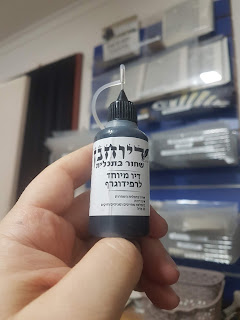
1. In the instructions we explain that Dio Lanetzach dries in 3 steps.
Delete10-20 minutes: dry to the touch.
24 hours: can fold parshiot shel rosh and roll a mezuzah.
3 weeks: can make "torture" experiments to test the strength of the ink.
After making a small correction on tfillin or mezuzah (which never includes a large area of ink) you can wait at least one hour for regular drying, then use a warm hair drier for a few minutes to speed up the drying. NEVER use a hair dryer on wet ink.
2. Regarding megilat sotah, I copied the section that explains it from diolanetzach.com:
יש טעות נפוצה לפיה סוברים שדיו סת"ם צריך שימחה במים. במגילת סוטה כתוב: "ומחה אל מי המרים" - לא מחה במים אלא מחה אל המים. קודם מחה את הדיו ואחר כך נפל הדיו המחוי אל המים. הרמב"ם כותב: "אינו כותבה לא בקומוס ולא בקנקנתום ולא בכל דבר שרישומו ניכר ועומד אלא בדיו שאין בו קנקנתום ... נשאר במגילה רושם כתב ניכר, פסולה עד שימחוק יפה יפה... כתב אות אחת ומחקה וחזר וכתב אות שנייה ומחקה עד שהשלים, פסולה עד שתהיה כולה כתובה." (הלכות סוטה, פרק ד). מכיוון שאי אפשר לחזור ולכתוב על מגילה רטובה אחרי מחיקה במים, אנו למדים שהמחיקה היתה ע"י גרוד יבש ולא ע"י שטיפה במים. רק דיו שאפשר למחוק יפה יפה בגרוד יבש בלי רושם כתב, כשר למגילת סוטה. דיו עפצים וקנקנתום פסול למגילת סוטה. (משנה, סוטה, פ'ב, מ'ד) כי "רישומו ניכר מאד ואינו נמחק לגמרי" (שו"ע הרב, לב, ד). י
דיו סת"ם חייב להיות כזה שגם "יתקיים אלפי שנים" (שו"ת הרמב"ם, קלו) וגם אפשר למחקו מחיקה נקיה "שאם תמחקנו יהיה נמחק" (רמב"ם, הלכות תפילין, א, ד), לא מחיקה במים אלא ע"י גירוד יבש בסכין.
Zvi, do you have a list of places that sell your Dyo in Israel? I used to see it at all the klaf places in Jerusalem. Now most of them only carry the ink for rapidiograph. I would like to try it out.
ReplyDeletecontact:
Delete052-760-3646
israel@diolanetzach.com