
דיוחנן - kosher rapidograph ink.... Experiences or comments pls
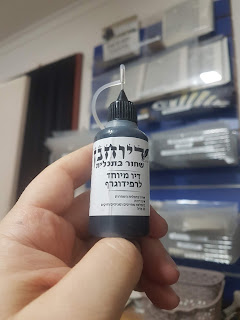
I recently tried this kosher ink for my rapidograph and I am extremely pleased with it. It does not clog the nib like other kosher rapidograph inks, and it's very dark and strong. It's at least as good as the Rotring commercial grade rapidograph inks (of course these can only be used with batch numbers that have been lab tested and approved kosher), and in addition you do not need to add a drop of regular Sta"m ink (as per the instruction of the Shevet Halevi, which is messy and time consuming). I was wondering if anyone else had an opinion or comments with regards to their experience with this ink...
it would take about 2 minutes to fix with an electric sander
ReplyDeleteHow can one sand the corner there where all of the mavarta is protruding even lower?
Deletei use a disc sander for the back corner
DeleteAs long as the square of the lower titura, and the square of the lower tfira are still recognized, IE their length and width are equal on all 4 sides, it is kosher. If not pasul, unless fixed.
ReplyDeletewhen you say equal you mean less that 1mm discrepancy
Deleteprior to any sanding, the titura should be pressed back into its proper form as best as possible. Once you've done your best to get it back into shape then you would sand whatever is necessary. Sanding is permanent and is not the first step.
ReplyDeleteBatim experts are able to use heat straighten the titura. This is not something I'd suggest trying on your own as it is easy to mess up. The warped corners can also be very carefully straightened with a pliers. Finally, often some corners will need to be soaked out and reshaped.
The large gap in the opening can be a problem with the ribua. Also, some hold that considerable warping affects the ribua and if the titura elyona and tachtona are not aligned (creating a step) then some consider this a problem in ribua as well. Hence the batim must be fixed.