
דיוחנן - kosher rapidograph ink.... Experiences or comments pls
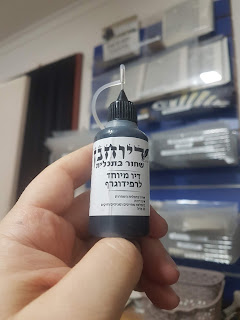
I recently tried this kosher ink for my rapidograph and I am extremely pleased with it. It does not clog the nib like other kosher rapidograph inks, and it's very dark and strong. It's at least as good as the Rotring commercial grade rapidograph inks (of course these can only be used with batch numbers that have been lab tested and approved kosher), and in addition you do not need to add a drop of regular Sta"m ink (as per the instruction of the Shevet Halevi, which is messy and time consuming). I was wondering if anyone else had an opinion or comments with regards to their experience with this ink...
Most likely it is just a byproduct of the haschola being done in a public ceremony. They honored a few important people to write the letters of Bereishis. Or they may have had a local sofer write the letters publicly and then had the rest of the sefer written by a different sofer. It doesn't look like it was done beshita because the beis is even bigger than the other letters.
ReplyDeleteBut perhaps I am wrong?
No this isn't a by product. This is most likely deliberate as there is a m'kor for this which is Masechet Sofrim 9:1 which says the bet should have four taggin and the letters of the WORD should be extended than all the other letters. This was an original tradition - I have seen this in a couple of other sifrey, one from Morocco. http://www.sofer.co.uk/html/large_letters.html has a picture.
ReplyDeleteThis fell out of use and is now just a large bet.
At the suggestion of my safrus rebbi in New York, I'm going to write the seller and try to get an appointment to look at it. We've been discussing it and expect some interesting variations.
ReplyDelete