דיוחנן - kosher rapidograph ink.... Experiences or comments pls
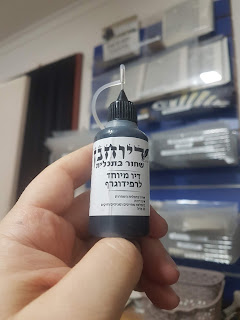
I recently tried this kosher ink for my rapidograph and I am extremely pleased with it. It does not clog the nib like other kosher rapidograph inks, and it's very dark and strong. It's at least as good as the Rotring commercial grade rapidograph inks (of course these can only be used with batch numbers that have been lab tested and approved kosher), and in addition you do not need to add a drop of regular Sta"m ink (as per the instruction of the Shevet Halevi, which is messy and time consuming). I was wondering if anyone else had an opinion or comments with regards to their experience with this ink...
If the sofer was a sefardi, this never would have happened!
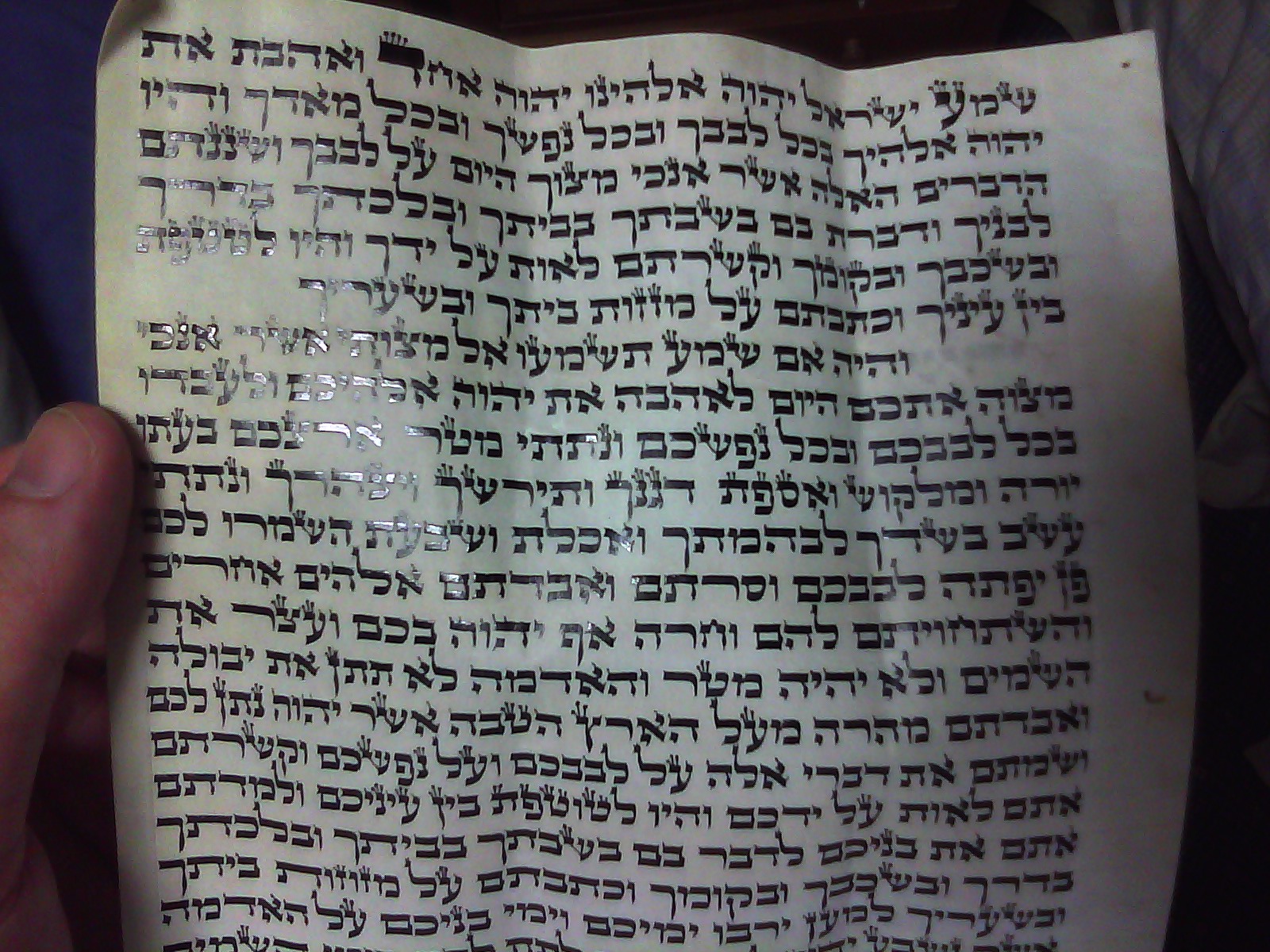
ReplyDeleteIn addition to the spelling mistake, note that:
ReplyDeleteThe ך of the second בשבתך and ובשעריך are most probably פסול.
The foot of the big ד is to short.
The extra תגים are not at all exact: 6 on מ of ובקומך(?),
דגנך ותירשך ויצהרך like in תפילין, in מזוזה should be nothing on ותירשך and on the ר of ויצהרך.
Lacking the תגים in many places (וקשרתם, אחרים and others).
In short, this sofer (in my opinion) needs to do a little bit homework before he continues.
I wouldn't have thought the kafim are Pasul. Lechatchila - definitely not. But I think they're kosher bediavad since the regel is longer than the gag (not easy to see in the pic) and they are yored mehaketiva amongst a ktav that has fairly consistent letter heights. Maybe at most a ST, but I'm not even sure about that.
ReplyDeleteAlso the regel of the dalet is short but also I think its kosher.
If the Regel is not longer than the Gag then it's a serious Safek of Tzuras Ha'os. After all, if this were the large Raish of Acher (ki lo sishtachaveh l'eil acheir), would it be Pasul because it's a long Kaf?
Deleteואבדתם
ReplyDeleteIn my experience, the two most common spelling mistakes in a mezuzah are:
ReplyDelete1) in the 2 places where the words letotofos and mezuzos are written - where the sofer has mixed up the moleh or choser and either left out a vov or added a vov.
2) in the two v'avadatems where he has mixed up the ayin / alef.
In my opinion, after checking a mezuzah normally, it is worth glancing over those 6 words a second time.
Also, I have commonly found the first written ועבדם - lacking the TAV
ReplyDelete