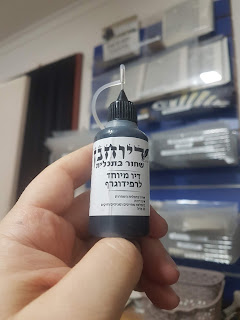
In today’s day and age, virtually every kosher product available to the consumer comes with a hechsher. By hechsher, I mean an official and recognised rabbinical body or agency that certifies the kashrus of a product, be it a food item or a religious article. Hechsherim play a vital role in providing consumer confidence, and something branded by a reputable kashrus agency will be considered more legitimate than a similar product that does not. The agency has rigid policies and protocols in place to ensure correct standards are met, and they are independent of the manufacturer so that there is no conflict of interest. As we have discussed on this forum previously, there is a distinct lack of official hechsherim on Sta”m products - Tefillin, Mezuzos and Sifrei Torah. Even the Vaad Mishmeres Sta”m, the oldest and most well- known rabbinic agency in the Sta”m world does not certify products. They test and ordain sofrim and magihim (examiners), offer a computer checking service (sp...
I once came across a translation on the net. However, I am not sure whether it would be ideal to suggest, because it was made by a woman who writes sta"m (despite the explicit p'suloh in Siman 1, which she translates). If you want it despite its provenance, I can find it fairly quickly.
ReplyDeleteJust for curiosity's sake, why aren't you using Mishnas Sofrim (Mishnah Berurah to OC 36)?
Is it permissable to use the "torah"-work of a woman who rejects Chaza"l?
ReplyDeleteThis comment has been removed by the author.
DeleteThis comment has been removed by the author.
Delete