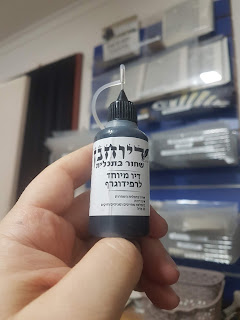
In today’s day and age, virtually every kosher product available to the consumer comes with a hechsher. By hechsher, I mean an official and recognised rabbinical body or agency that certifies the kashrus of a product, be it a food item or a religious article. Hechsherim play a vital role in providing consumer confidence, and something branded by a reputable kashrus agency will be considered more legitimate than a similar product that does not. The agency has rigid policies and protocols in place to ensure correct standards are met, and they are independent of the manufacturer so that there is no conflict of interest. As we have discussed on this forum previously, there is a distinct lack of official hechsherim on Sta”m products - Tefillin, Mezuzos and Sifrei Torah. Even the Vaad Mishmeres Sta”m, the oldest and most well- known rabbinic agency in the Sta”m world does not certify products. They test and ordain sofrim and magihim (examiners), offer a computer checking service (sp...

I fail to understand, to me it looks like it has a distinct rosh...
ReplyDeleteBoth gimels have the same problem. Or only the first one?
ReplyDeleteRav Moshe is referring to the first one.
ReplyDeleteThis comment has been removed by the author.
ReplyDeleteואני חושש לפסלה עד התיקון משום חסר ראש, ושינוי צורתה
ReplyDeleteNot sure I understand. If there is שינוי צורה, doesn't fixing it constitute שלא כסדרן ?
אני חושש לפסלה משום שהוא גולם, ולכן מציע שיש לתקן הראש. ותיקון הראש מותר, אע"פ שיתכן שהיא פסולה בלעדי התיקון כמבואר בכמה אחרונים בנוגע לתיקון הגלמים
Delete