In today’s day and age, virtually every kosher product available to the consumer comes with a hechsher. By hechsher, I mean an official and recognised rabbinical body or agency that certifies the kashrus of a product, be it a food item or a religious article. Hechsherim play a vital role in providing consumer confidence, and something branded by a reputable kashrus agency will be considered more legitimate than a similar product that does not. The agency has rigid policies and protocols in place to ensure correct standards are met, and they are independent of the manufacturer so that there is no conflict of interest. As we have discussed on this forum previously, there is a distinct lack of official hechsherim on Sta”m products - Tefillin, Mezuzos and Sifrei Torah. Even the Vaad Mishmeres Sta”m, the oldest and most well- known rabbinic agency in the Sta”m world does not certify products. They test and ordain sofrim and magihim (examiners), offer a computer checking service (sp...
מותר לגרר
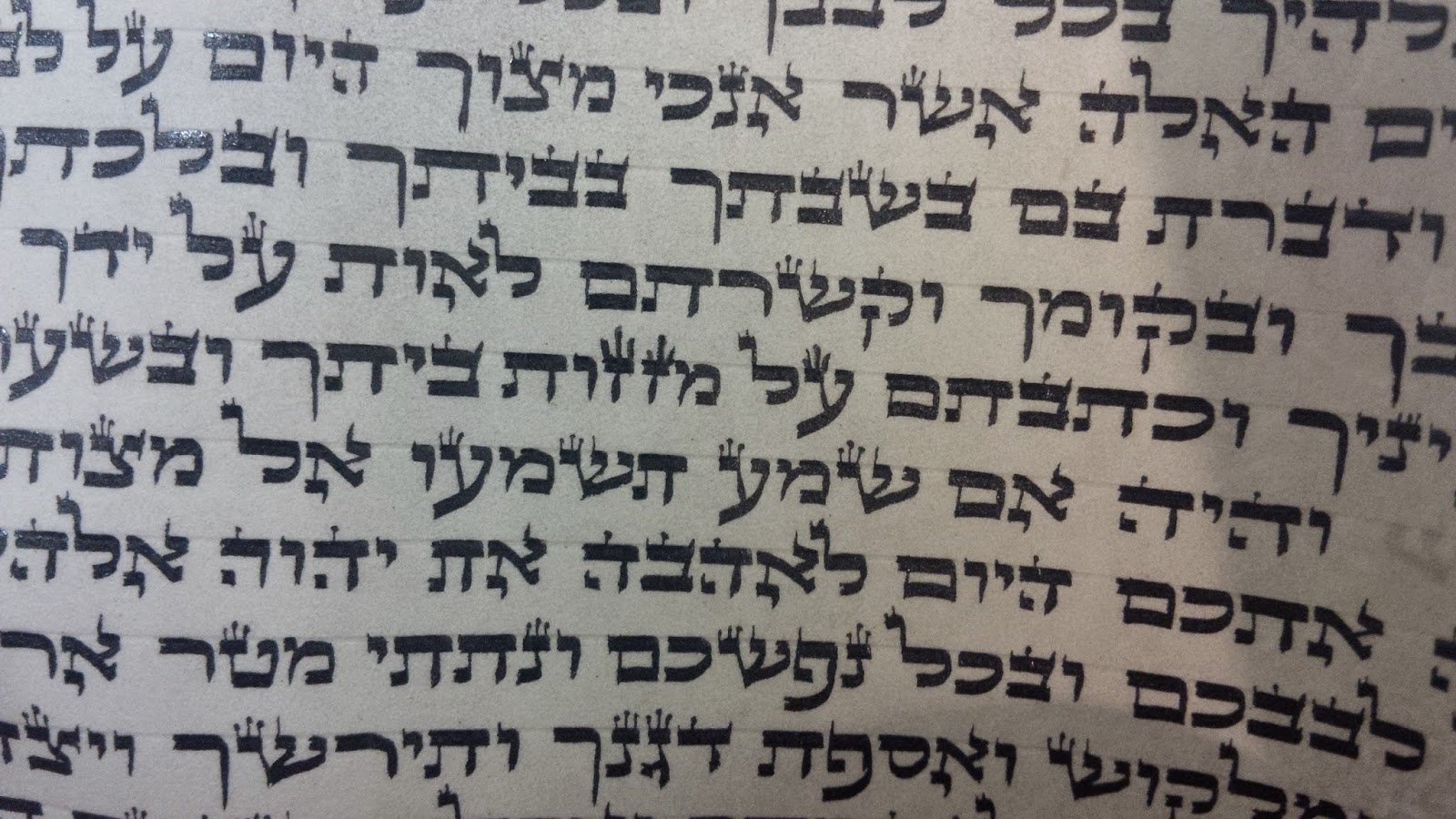
ReplyDeleteThank you. Just for my own shimush, if the mem would have been more like a chof vov tzurah with a thin churtem, would it still be fixable?
ReplyDeleteA negia "sometimes makes it look like other letters but you do not have to use wild imagination, if you would ask a tinok to read it he would read as mem vov.
ReplyDeleteyes if it would have a very thin long bridge (which is done by many sofrim and nobody ever tells them that its wrong) and the negia between the next vov is close and thick it might be a shinui tzura
I agree. I think each case must be seen independently. So there might occur a shayla that will be passul, since it is equaly possible a mem zayin, or caf and ches.
DeleteThe sofer needs to learn how to write a chaf pesuta.
ReplyDeletepeshuta
ReplyDeletecorrect- the halacha writes to be careful not to make the ך too wide.
ReplyDeletesome sofrim decided that if too narrow it will be a vav similar to the sofrim that make short vavs worrying it will be a ן. imagining that it looks like another letter should be used only where chazal tell us to be worried,otherwise as long as it doesn't clearly look like another letter it is kosher