In today’s day and age, virtually every kosher product available to the consumer comes with a hechsher. By hechsher, I mean an official and recognised rabbinical body or agency that certifies the kashrus of a product, be it a food item or a religious article. Hechsherim play a vital role in providing consumer confidence, and something branded by a reputable kashrus agency will be considered more legitimate than a similar product that does not. The agency has rigid policies and protocols in place to ensure correct standards are met, and they are independent of the manufacturer so that there is no conflict of interest. As we have discussed on this forum previously, there is a distinct lack of official hechsherim on Sta”m products - Tefillin, Mezuzos and Sifrei Torah. Even the Vaad Mishmeres Sta”m, the oldest and most well- known rabbinic agency in the Sta”m world does not certify products. They test and ordain sofrim and magihim (examiners), offer a computer checking service (sp...
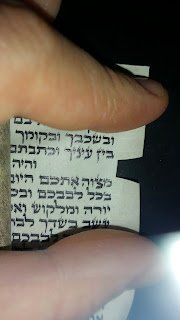


So you can see it when it's rolled up...
ReplyDeleteWell yes, but why mutilate the Mezuza?
DeleteBecause the cutting doesn't affect the Kashrus of the mezuza and there is a strong minhag to see the shakai. It just doesn't look so nice.
ReplyDeleteI should point out though that if the cutting were to go into the parsha stuma it would present a problem...
This is often done by sfardi mezuzos. The put the shakay further in so it's one of the ways you can still see it after its rolled.
ReplyDeleteThe second way is to fold the right margin. I prefer that method to cutting
I've never heard any discussion or asked Rav Friedlander about folding the right side so I don't know which is better. This is also an issue on high end mezuzahs where they leave a margin of blank klaf for k'dei lagol. Rav Friedlander did suggest that its better to cut the klaf and make a flap and fold it back rather than remove the piece completely. The best eitzah is, if possible, to use a case that doesn't require the klaf to be rolled tightly.
ReplyDelete