A place for English speaking sofrim (scribes), magihim (examiners), rabbis and vendors of Stam (Torah, Tefillin and Mezuzah scrolls) from around the world to communicate, share ideas, ask questions and offer support and advice.
The problem with the above ZAYIN is that the YERECH comes out way too close to the right edge of the ROSH and the head is rounded on the right. Therefore, this letter has lost its shape. As such, I agree with R. Moshe, that even the reading of a TINOK would be of NO avail.
However, if the YERECH were to start in the MIDDLE and extend close to the right edge of the ROSH due to extra ink at the place where they both meet, in such a case, it would be KASHER as is, and a TINOK not required.
In any other (in between) case of SAFEK, I would agree with R. Yankev that a TINOK would definitely be of avail.
ז' ...ראשה צריך להיות עובר מב' צדדין שלא תדמה לוי"ו – לו, ב לכתחילה צריך לכתוב... אם שינה לא פסל אלא א"כ הפסיד צורת האות לגמרי – שו"ע אדמו"ר הזקן לו, א ובספרדית... ועובר על גופה משני צדדין אבל לא בשוה, כי הירך יוצא ממנה בצד ימין קרוב לסופו, ועל כל פנים נוטה מאמצע הראש לימין... – קול יעקב לו, ס"ק ז והרי בשו"ת נ"ב חי"ד סי' פ' הביא ראיה מכתב וועלי"ש להכשיר בתמונת האותיות, הרי פשיטא לי' דכתב וועלי"ש כשר בדיעבד, דהיינו שכן כותבין בספרד ע"ש – שו"ת צמח צדק יו"ד סי' רה וכשספק על צד אחד אם זה הוי עובר כראוי או לא, בעי תינוק – מקדש מעט אות ז וראה שו"ת צמח צדק אבן העזר סימן קסה עמ' כד, ד – כפי שמצויין על הצד בשו"ע אדה"ז לו, ד
בבקשה מי שיש לו מראה מקום לפסול ובפרט בלי שאלת תינוק, שיזכה את הרבים
Please take a look at Sefekot HaSofer - OT Zayin #9 & #10. Study the slight differences between both of these cases in order to understand why a case like the one above would be passul.
As an aside, it's true that in many older Sephardic and Middle Eastern scripts the yerech appeared to reach the right edge of the ROSH. However, in this style of "velish" writing the letter always maintained a distinct shape.
Some of them, would be written similar to the previous post by R. Gutnick on "cheap stam" where showing a Tinok is considered only a CHUMRA. Others, would have the Rosh of the ZAYIN inclined at an angle (like in the Leningrad and Aleppo Codexes).
In all of the above cases, even though the YERECH extends to the right, the ROSH always remains SQUARE. It is the combination of the rounded flat head + the foot emerging way too close from the right side of the head that causes the ZAYIN in our case to loose it's shape. In such a case, a TINOK is of no avail.
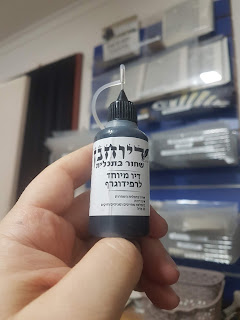
I recently tried this kosher ink for my rapidograph and I am extremely pleased with it. It does not clog the nib like other kosher rapidograph inks, and it's very dark and strong. It's at least as good as the Rotring commercial grade rapidograph inks (of course these can only be used with batch numbers that have been lab tested and approved kosher), and in addition you do not need to add a drop of regular Sta"m ink (as per the instruction of the Shevet Halevi, which is messy and time consuming). I was wondering if anyone else had an opinion or comments with regards to their experience with this ink...
We all know that there is no ancient source that requires ink to be מן המותר בפיך . Possibly, as said here before, because in the olden days ink was always מן המותר בפיך and the question was never raised. It was probably self-evident. Nowadays, no decent Rav will approve an ink which is not מן המותר בפיך . Who was the first one to raise this question? Was it raised because of animal ingredients or because of non-kosher wine?
In today’s day and age, virtually every kosher product available to the consumer comes with a hechsher. By hechsher, I mean an official and recognised rabbinical body or agency that certifies the kashrus of a product, be it a food item or a religious article. Hechsherim play a vital role in providing consumer confidence, and something branded by a reputable kashrus agency will be considered more legitimate than a similar product that does not. The agency has rigid policies and protocols in place to ensure correct standards are met, and they are independent of the manufacturer so that there is no conflict of interest. As we have discussed on this forum previously, there is a distinct lack of official hechsherim on Sta”m products - Tefillin, Mezuzos and Sifrei Torah. Even the Vaad Mishmeres Sta”m, the oldest and most well- known rabbinic agency in the Sta”m world does not certify products. They test and ordain sofrim and magihim (examiners), offer a computer checking service (sp...

I would be machshir with a שאלת תינוק.
ReplyDeleteThe problem with the above ZAYIN is that the YERECH comes out way too close to the right edge of the ROSH and the head is rounded on the right. Therefore, this letter has lost its shape. As such, I agree with R. Moshe, that even the reading of a TINOK would be of NO avail.
ReplyDeleteHowever, if the YERECH were to start in the MIDDLE and extend close to the right edge of the ROSH due to extra ink at the place where they both meet, in such a case, it would be KASHER as is, and a TINOK not required.
In any other (in between) case of SAFEK, I would agree with R. Yankev that a TINOK would definitely be of avail.
ז' ...ראשה צריך להיות עובר מב' צדדין שלא תדמה לוי"ו – לו, ב
ReplyDeleteלכתחילה צריך לכתוב... אם שינה לא פסל אלא א"כ הפסיד צורת האות לגמרי – שו"ע אדמו"ר הזקן לו, א
ובספרדית... ועובר על גופה משני צדדין אבל לא בשוה, כי הירך יוצא ממנה בצד ימין קרוב לסופו, ועל כל פנים נוטה מאמצע הראש לימין... – קול יעקב לו, ס"ק ז
והרי בשו"ת נ"ב חי"ד סי' פ' הביא ראיה מכתב וועלי"ש להכשיר בתמונת האותיות, הרי פשיטא לי' דכתב וועלי"ש כשר בדיעבד, דהיינו שכן כותבין בספרד ע"ש – שו"ת צמח צדק יו"ד סי' רה
וכשספק על צד אחד אם זה הוי עובר כראוי או לא, בעי תינוק – מקדש מעט אות ז
וראה שו"ת צמח צדק אבן העזר סימן קסה עמ' כד, ד – כפי שמצויין על הצד בשו"ע אדה"ז לו, ד
בבקשה מי שיש לו מראה מקום לפסול ובפרט בלי שאלת תינוק, שיזכה את הרבים
Please take a look at Sefekot HaSofer - OT Zayin #9 & #10. Study the slight differences between both of these cases in order to understand why a case like the one above would be passul.
ReplyDeleteAs an aside, it's true that in many older Sephardic and Middle Eastern scripts the yerech appeared to reach the right edge of the ROSH. However, in this style of "velish" writing the letter always maintained a distinct shape.
Some of them, would be written similar to the previous post by R. Gutnick on "cheap stam" where showing a Tinok is considered only a CHUMRA. Others, would have the Rosh of the ZAYIN inclined at an angle (like in the Leningrad and Aleppo Codexes).
In all of the above cases, even though the YERECH extends to the right, the ROSH always remains SQUARE. It is the combination of the rounded flat head + the foot emerging way too close from the right side of the head that causes the ZAYIN in our case to loose it's shape. In such a case, a TINOK is of no avail.