In today’s day and age, virtually every kosher product available to the consumer comes with a hechsher. By hechsher, I mean an official and recognised rabbinical body or agency that certifies the kashrus of a product, be it a food item or a religious article. Hechsherim play a vital role in providing consumer confidence, and something branded by a reputable kashrus agency will be considered more legitimate than a similar product that does not. The agency has rigid policies and protocols in place to ensure correct standards are met, and they are independent of the manufacturer so that there is no conflict of interest. As we have discussed on this forum previously, there is a distinct lack of official hechsherim on Sta”m products - Tefillin, Mezuzos and Sifrei Torah. Even the Vaad Mishmeres Sta”m, the oldest and most well- known rabbinic agency in the Sta”m world does not certify products. They test and ordain sofrim and magihim (examiners), offer a computer checking service (sp...
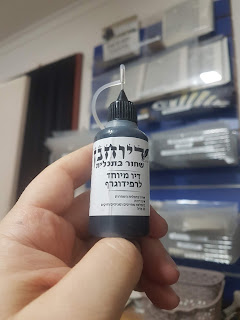
Harav Meir Mazuz allows writing a name on the bottom of the batim and/on the end of the back side of the retzuos (as long as the lettering isn’t raised). (Mekor Ne’eman 66 and 70)
ReplyDeleteAny other mekoros?
מלאכת שמים
ReplyDeleteThanks. Do you know where in the Meleches shamayim?
DeleteSee last paragraph in the בינה, סימן יט
Deletethank you! Interesting that it's not mentioned in any of the sources I note. Did you see any sources who bring this Meleches Shamayim?
DeleteThe only other 2 sources I've found are Zichron Eliyahu pages 365-366, based on Rama Mipano siman 38, not to write on back of batim and possibly not on back of retzuos
ReplyDeleteShu"t Shevet Hakehati 2:28 seems to okay writing on the back of the retzuos. Interestingly, Piskei Teshuvos presents this as a source to allow writing on the bottom of batim and retzuos but in his latest printing he leaves it out and writes not to write anything on the back, though he doesn't really bring a source to support it.
Keses Hasofer 26:4. Also based on Rama Mipano.
ReplyDelete